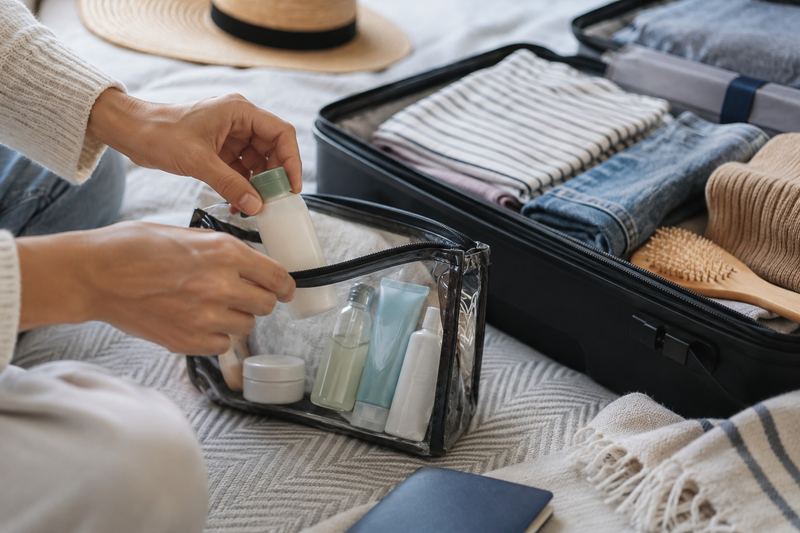
You can take liquids, gels, creams, pastes and aerosols in your carry-on if each container holds 3.4 oz (100 ml) or less and all of them fit in one quart-size bag. That is TSA's 3-1-1 rule. Medication, baby formula and breast milk can exceed it. Larger toiletries go in checked bags.
Key facts
- Carry-on limit: 3.4 oz (100 ml) per container, measured by the size printed on the container, not what is left inside.
- One quart-size bag of liquids per passenger.
- Exempt in reasonable amounts: medically necessary liquids, baby formula, breast milk and baby food. Declare them at screening.
- Checked bags (FAA): toiletries such as aerosols and perfume are capped at 18 oz (500 ml) per container and 70 oz (2 L) per person in total.
- As of October 2026, TSA has not announced any change to the 3.4 oz limit.
How many ounces of liquid can you take on a plane?
In a carry-on bag, each container can hold up to 3.4 oz (100 ml). There is no rule on how many containers you bring, but all of them must fit in one quart-size bag, and each passenger gets one bag. In practice that limits you to roughly a quart (about 1 liter) of liquids in total.
The limit is about the container, not the contents. A 6 oz (177 ml) tube of toothpaste that is almost empty is still a 6 oz container and will be pulled at the checkpoint. Look for the volume printed on the label; unlabeled travel bottles can slow screening down.
In checked bags, TSA sets no size limit for ordinary liquids such as shampoo, lotion or toothpaste. A separate FAA rule limits toiletries that count as hazardous materials, such as aerosols and alcohol-based perfume (see below).
What is the 3-1-1 rule?
The name is a memory aid for three parts of the rule:
- 3: containers of 3.4 oz (100 ml) or less.
- 1: all containers in one quart-size bag.
- 1: one bag per passenger.
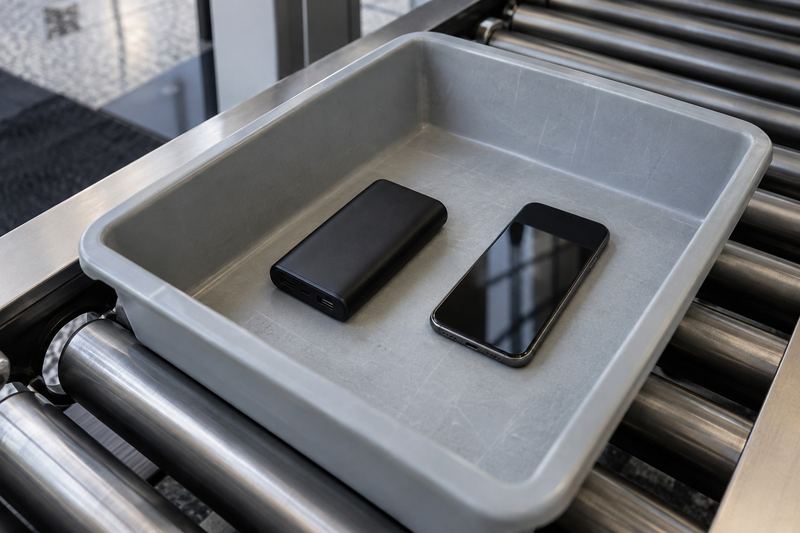
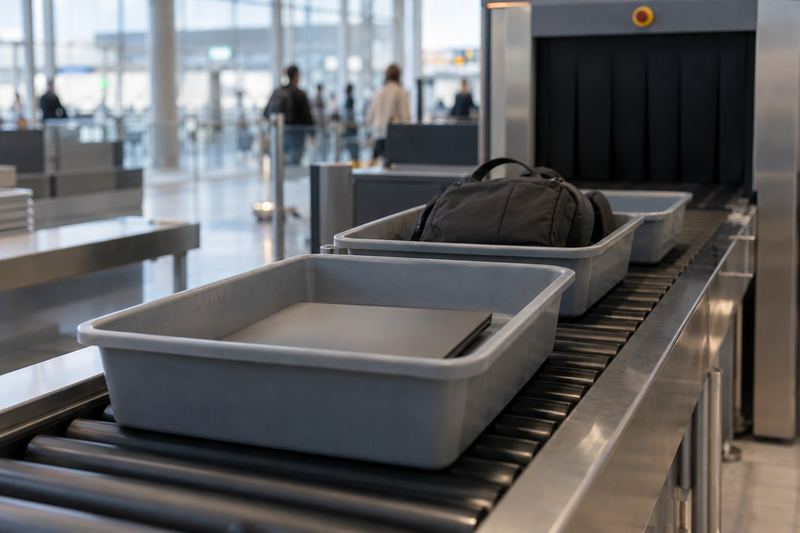
Take the bag out of your carry-on and put it in a bin unless the officers tell you otherwise. TSA notes that separating the bag helps screening go faster. Follow the instructions at your checkpoint; the size limits are the same everywhere in the US.
What counts as a liquid at airport security?
TSA's rule covers liquids, aerosols, gels, creams and pastes. A useful test from TSA's food guidance: if you can spread it, pour it or pump it, treat it as a liquid. Sprays count too. That includes:
- Toiletries: toothpaste, shampoo and conditioner, lotion and face cream, hair gel, mouthwash, liquid foundation and mascara.
- Aerosols: spray deodorant, hairspray, shaving foam and dry shampoo. Flammable non-toiletry sprays such as spray paint or cooking spray are banned entirely.
- Fragrance: perfume and cologne. A standard 100 ml bottle is exactly the limit; a 125 ml bottle is over it.
- Food: peanut butter, yogurt, jam, dips, sauces, soup and other spreads. A sandwich that already has peanut butter on it is solid food.
- Drinks: water, juice, coffee and alcohol. Empty bottles of any size are fine; fill them after security.
What doesn't count
Solids do not go in the quart bag and have no size limit in a carry-on. TSA lists bar soap, solid stick deodorant, lipstick, stick lip balm and solid or powder makeup as allowed. Solid shampoo and conditioner bars are not liquids either. Powders are not liquids, but TSA asks you to put powders over 12 oz (350 ml) in a separate bin, and they may get extra screening.
What liquids are exempt from the 3.4 oz rule?
TSA allows larger amounts of a few liquids. You do not need to put them in the quart bag, but you should tell the officer about them at the start of screening and expect extra checks.
| Item | Carry-on rule | What to expect |
|---|---|---|
| Liquid medication | Over 3.4 oz allowed in reasonable quantities for your trip | Declare it; officers may open or test it |
| Baby formula and baby food | Over 3.4 oz allowed | Separate screening; ice and gel packs to keep it cool are allowed |
| Breast milk | Over 3.4 oz allowed, and your child does not need to travel with you | Officers may test it but do not put anything into the milk |
| Duty-free liquids on a connection | Allowed if bought abroad, sealed in a tamper-evident bag, with a receipt from the last 48 hours | Rescreened; anything that alarms must be checked or left behind |
For medication, TSA does not require original pharmacy bottles, but state labeling laws can apply. Check with your doctor or pharmacist if you are unsure what you need. Our guide to flying with medication covers pills, liquids and devices in more detail.
How do duty-free liquids work on connecting flights?
If you buy perfume or alcohol at a foreign airport and then connect in the US, you go through TSA screening again. TSA lets the bottles through in your carry-on only if the shop sealed them in a transparent, secure, tamper-evident bag, the bag shows no sign of tampering, and you have the original receipt showing a purchase within the last 48 hours. TSA still recommends moving large duty-free liquids into your checked bag at your connection when you can.
How much liquid can you bring in checked luggage?
TSA has no size limit for ordinary liquids in checked bags. The FAA does limit "medicinal and toiletry articles" that are hazardous, such as aerosols, alcohol-based perfume and cologne, hairspray, nail polish and some hand sanitizers:
- No single container over 18 oz (0.5 kg) or 17 fl oz (500 ml).
- No more than 70 oz (2 kg) or 68 fl oz (2 L) of these items in total per person.
- Aerosol nozzles must be capped or otherwise protected so they cannot spray.
Alcoholic drinks have their own FAA limits: drinks over 24% and up to 70% ABV are limited to 5 L (1.3 gal) per person in unopened retail packaging, and anything over 70% ABV cannot fly.
Cabin pressure changes can push liquid out of full bottles. Leave a little air in each container and seal bottles in a plastic bag.
What happens if you forget and pack a large bottle?
A container over 3.4 oz that is not exempt will not go through the checkpoint in your carry-on. If the officer finds it, your realistic options are to go back and put it in a checked bag, if your airline still accepts bags for your flight, or to leave it at the checkpoint and not get it back. Allow extra time if you might need to recheck a bag. TSA officers have the final say on what goes through, so if you are unsure about an item, pack it in your checked bag.
If you only fly with a carry-on, decant into travel bottles before you leave or buy full-size products at your destination. Our toiletry bag guide covers how to fit everything into one quart bag.
Is the rule different outside the US?
Most countries use the same 100 ml container limit, usually with a 1-liter clear bag instead of a quart bag. Some UK and EU airports with newer scanners now allow containers of up to 2 liters, while Australia and New Zealand apply limits only on international flights. See our 100 ml liquid rule by country guide before a trip abroad.
Questions people ask
Can I bring a 4 oz bottle if it's only half full?
No. TSA judges the container size, not how much is in it, so any container larger than 3.4 oz (100 ml) must go in a checked bag.
Is toothpaste a liquid for TSA?
Yes. Toothpaste is a paste, so the tube must be 3.4 oz (100 ml) or smaller and go in your quart bag. Toothpaste tablets are solid and do not count.
Can I bring yogurt or peanut butter through airport security?
Only in containers of 3.4 oz (100 ml) or less inside your quart bag, because TSA treats spreadable and creamy foods as liquids or gels. Larger containers go in checked bags.
Do I need to put medication in my liquids bag?
No. Medically necessary liquids can exceed 3.4 oz and stay out of the quart bag, but tell the officer about them at the start of screening.
Can I bring an empty water bottle through security?
Yes. Empty bottles and tumblers of any size are allowed, and you can fill them after the checkpoint.
Has TSA changed the liquids rule in 2026?
As of October 2026, TSA's official pages still show 3.4 oz (100 ml) per container in one quart-size bag. No official change has been announced.
Sources
- TSA: Liquids rule
- TSA: What is the 3-1-1 liquids rule?
- TSA: Liquids, aerosols and gels rule FAQ
- TSA: Candy (solid vs. liquid food guidance)
- TSA: Peanut butter
- TSA: Solid makeup
- TSA: Medications (liquid)
- TSA: Can you pack your meds in a pill case?
- TSA: Breast milk
- TSA: Traveling with children
- TSA: Coffee thermos (empty)
- FAA PackSafe: Medicinal and toiletry articles
- FAA PackSafe: Aerosols
- FAA PackSafe: Alcoholic beverages